
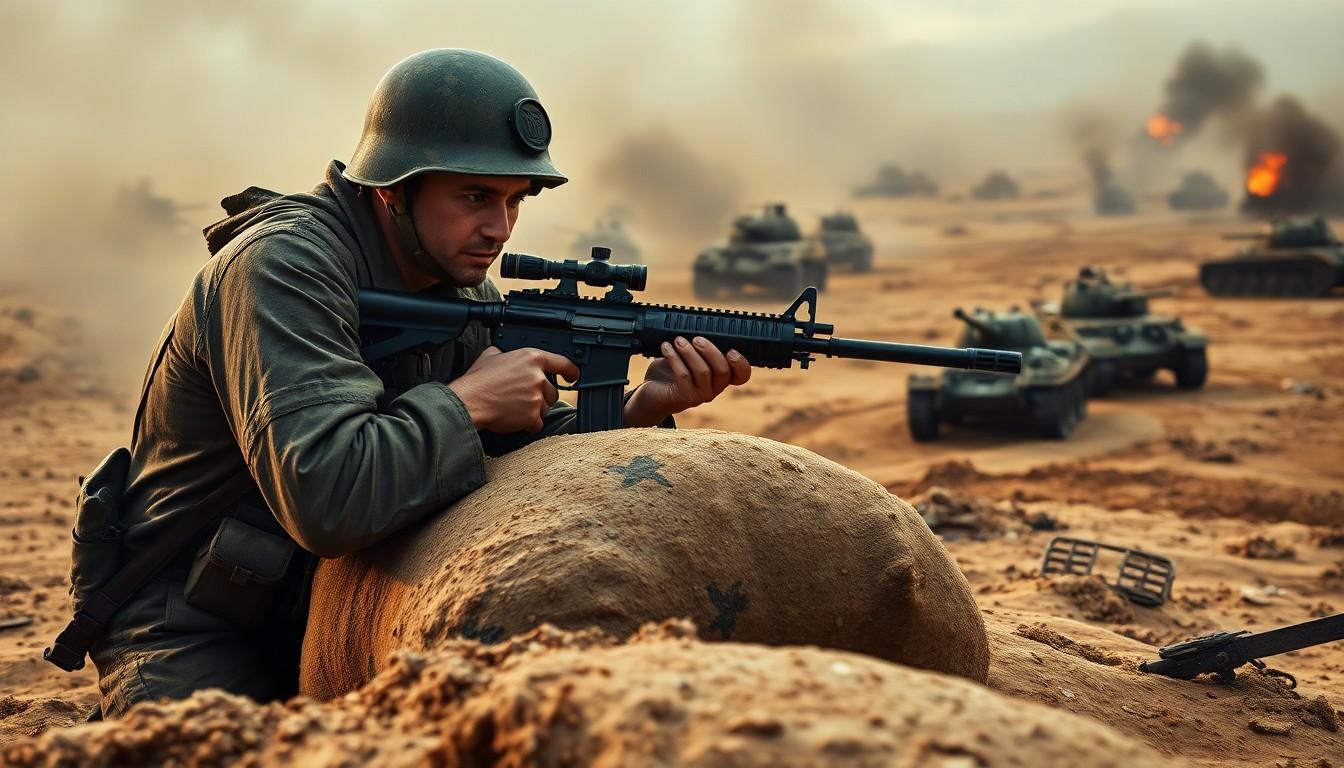
In the vast universe of video games, few franchises have captured the hearts of players like Battlefield. But before the epic battles and jaw-dropping graphics, there was a humble beginning that set the stage for chaos and camaraderie. What was the first Battlefield game? Spoiler alert: it wasn’t a high-tech, futuristic warzone but rather a classic that laid the groundwork for all the explosive fun to come.
Overview of Battlefield Series
Launched in 2002, the Battlefield series quickly gained recognition for its large-scale multiplayer gameplay. Developed by DICE and published by Electronic Arts, the franchise emphasizes team-based tactics and vehicle warfare. Players engage in intense battles across various settings, from World War I to futuristic conflicts.
Each title within the series builds on its predecessors, offering innovative gameplay mechanics and increased realism. Numerous games, including Battlefield 1942, Battlefield: Bad Company, and Battlefield V, showcase differing historical contexts and gameplay enhancements. Gamers appreciate the balance between strategic squad play and individual action, making for compelling multiplayer experiences.
The franchise’s signature focus on destruction alters the battlefield environment, keeping engagements dynamic and unpredictable. In competitive modes, players often collaborate in squads, leveraging unique character classes and abilities. As a testament to its success, the series has evolved into a staple of competitive gaming, hosting esports tournaments worldwide.
Released in a time when many shooters focused on linear play, Battlefield stood out by prioritizing wide-open spaces and diverse gameplay options. The introduction of vehicles, from tanks to aircraft, adds layer upon layer to combat strategy. Player feedback has shaped many updates, driving refinements and new features.
Overall, the Battlefield series remains a leader in the shooter genre. Gamers continually seek the immersive experiences it provides, leading to a dedicated community. With each installment, it redefines the standards of multiplayer warfare, ensuring its position in gaming history.
The Origins of Battlefield

The Battlefield franchise began its journey with a clear mission: to deliver impactful multiplayer experiences. Launched in 2002, the first game set a strong foundation for the series’ evolution.
Development and Release
DICE developed Battlefield 1942, partnering with Electronic Arts for its release. The game arrived on September 10, 2002. Utilizing a modified version of the Refractor engine, developers aimed for expansive maps and dynamic mechanics. Players could command vehicles, a novel feature at the time, enhancing gameplay. Battlefield 1942 focused on World War II battles, allowing gamers to engage in iconic conflict locations like Stalingrad and Wake Island. This emphasis on team play and creative strategies marked the beginning of an influential series.
Initial Reception
Players and critics received Battlefield 1942 enthusiastically, praising its innovative gameplay. Reviews highlighted the impressive scale, with up to 64 players competing in online matches. Gamers appreciated the extensive maps and varied classes, contributing to tactical depth. The blend of infantry combat and vehicle warfare captured attention. Sales figures reflected this success, with over 1 million copies sold worldwide within months. The game’s reception established Battlefield as a standout contender in the first-person shooter genre, setting a high bar for future installments.
Gameplay Features of the First Battlefield Game
The first Battlefield game, Battlefield 1942, showcased significant advancements in graphics and sound design, enhancing player immersion. Utilizing a modified Refractor engine, the game displayed expansive maps with varied terrains and dynamic environments. Each location featured rich details, drawing players into historical battles. Players experienced realistic soundscapes that delivered an authentic atmosphere, from distant explosions to the roar of aircraft engines. These visuals and audio elements contributed to the overall engagement during gameplay.
Graphics and Sound Design
Battlefield 1942 employed its engine to render large-scale environments, offering players detailed landscapes reflective of World War II settings. Players could navigate through cities, forests, and beaches, experiencing varied conditions. The graphics offered smooth character animations and intricate vehicle models. Audio design supported gameplay with realistic sound effects, including gunfire and vehicle movements, elevating the sense of realism. Together, these aspects created a compelling gaming experience that captivated players.
Multiplayer Mechanics
Multiplayer mechanics revolutionized first-person shooters, allowing up to 64 players to join large-scale battles. Players formed squads, emphasizing cooperation and tactical gameplay. Each class offered unique abilities, encouraging diverse strategies on the battlefield. Collaboration enhanced team dynamics through coordinated attacks and vehicle usage. Map designs facilitated various combat experiences, catering to infantry and vehicle combat alike. The seamless integration of these mechanics established a foundation for multiplayer gameplay that many subsequent titles would build upon.
Impact on Gaming Culture
The Battlefield franchise set a new standard in gaming, profoundly affecting its culture and the first-person shooter (FPS) genre.
Influence on FPS Genre
Battlefield 1942 introduced large-scale battles, giving players a taste of war on a grand scale. This title shifted the FPS landscape, prioritizing team-based tactics over individual gameplay. Its mechanics allowed for up to 64 players in online matches, breaking previous limitations. Innovations like vehicle warfare and expansive maps created engaging experiences. Other games from its time often limited player interactions in smaller arenas. Players now enjoyed dynamic combat, with environments that changed through destruction. This focus on collaboration fostered a community that thrives on teamwork and strategy. The successful formula of Battlefield 1942 influenced countless subsequent titles, inspiring future games to adopt its expansive design.
Legacy of the First Battlefield Game
The impact of Battlefield 1942 remains relevant in today’s gaming world. Many elements established in this game continued to shape the series and the FPS genre. Its immersive gameplay inspired developers, showcasing how to blend infantry and vehicular combat effectively. Players appreciated the sense of realism and tactical depth offered by its mechanics. This title sold over 1 million copies within months, highlighting its popularity and demand. The success of Battlefield 1942 sparked a series of sequels that expanded its mythos and gameplay features. Its influence extends beyond gameplay dynamics, as it also established a foundation for competitive gaming events. Thus, the legacy of the first Battlefield game resonates through modern gaming, influencing both design and community engagement.
Conclusion
The legacy of Battlefield 1942 is undeniable. It not only set the stage for an iconic franchise but also transformed the first-person shooter landscape. With its focus on large-scale battles and team-based tactics it redefined multiplayer gaming.
Players continue to appreciate the immersive experiences that the series offers. The innovations introduced in Battlefield 1942 have influenced countless titles and fostered a vibrant community. As the franchise evolves it remains committed to pushing the boundaries of gameplay and maintaining its status as a leader in the genre.


